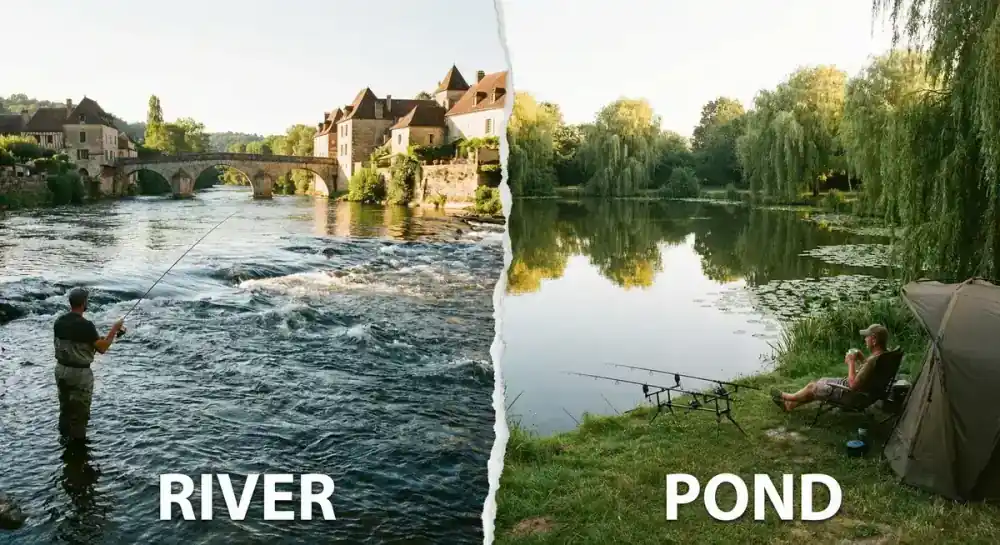
The best time depends on the conditions first
Carp may feed in daylight or after dark. Looking for a fixed hour — 6am, noon or 10pm — often misses the important factors: water temperature, light, flow, disturbance and the location of natural food. Two nearby swims on the same river can have very different rhythms.
The more useful question is not simply when, but what changes in the river at that time. A margin warms in sunlight, a back-current settles at dusk or rising water brings food downstream. These changes give carp a reason to move. Your observations then let you test a calm, repeatable plan.
Light, temperature and carp activity
Sunrise and sunset remain worthwhile periods because light falls and banks are often quieter. They should not make you ignore the rest of the day. In spring or autumn, a shallow area warmed by the sun can become attractive at midday. In summer, cooler hours, darkness and better-oxygenated water can matter more.
Watch the evidence rather than the clock: shows, rolling fish, repeated bubbles, baitfish movement, feeding birds and takes on one particular rod. One sign can mislead, but several signs in the same place justify holding a rod there or moving a presentation.
On a first session, record the time of every sign even if you do not get a take. You soon build a more useful picture than a rule from the internet.
Matching your timing to the season
Season changes the likely windows, not the need to observe. In spring, warming water and margins can come alive. In summer, settled fishing during the cool hours and attention to shaded or oxygenated areas often helps. Autumn can offer more regular feeding spells, while winter asks you to accept shorter windows and place every rig carefully.
Keep your rhythm realistic: one rod on a dependable area, another on a place you want to test, then adjust only when evidence supports the move. Consistency lets you understand what is working; changing every rod every hour does not.
| Season | Windows to watch | Priority |
|---|---|---|
| Spring | Warmer part of the day and warming margins | Watch quiet, shallow areas |
| Summer | Dawn, dusk and night | Comfort, discretion and oxygen |
| Autumn | Morning, mild afternoon and late day | Keep a steady plan |
| Winter | Short daytime spells | Precise presentation and patience |
Read the Lot's rhythm instead of following a recipe
On a river, current structures fish movement. A carp may feed in a quiet margin at dawn, travel along a drop-off when flow changes, then hold deeper after a cold night. Level, water colour and wind can redraw that map quickly. Start by finding two or three areas where a rig can be placed and a fish landed safely.
When a rod produces or fish show, resist moving everything at once. First repeat what appears to have worked: depth, range, bait and location. Then change one variable only. This simple method separates a real activity window from one isolated event.
A simple plan for a 24-hour session
On arrival, watch before casting and put two rods on your clearest options. Keep a third for a margin, a depth change or a place where activity appears. Before dark, check rigs and prepare lighting and fish-care equipment so you can react calmly. Record the time, area and conditions after every sign.
The next day, focus your effort on the area or window that produced the clearest evidence. If nothing happens, move one rod rather than the entire set-up. You will make progress without overreacting to a quiet period.
Organising a carp session by the water
Fishing the best windows requires enough comfort to stay observant without exhausting yourself. Prepare suitable clothes, reliable lighting and all fish-care equipment before the rods go out. Good organisation makes dawn, dusk or a night-time take safer for both fish and angler.
Gîte du Martin Pêcheur has direct access to the River Lot and a private pontoon, making it easy to watch the water at different times of day. Check available dates, then contact us with your plans for practical information before arrival.