Why autumn can be so productive
As daylight shortens and the water gradually cools, carp frequently settle into more regular feeding patterns. That is not a guarantee of action: weather, flow and angling pressure still matter. Autumn simply rewards an angler who watches first and gives a sound plan enough time to work.
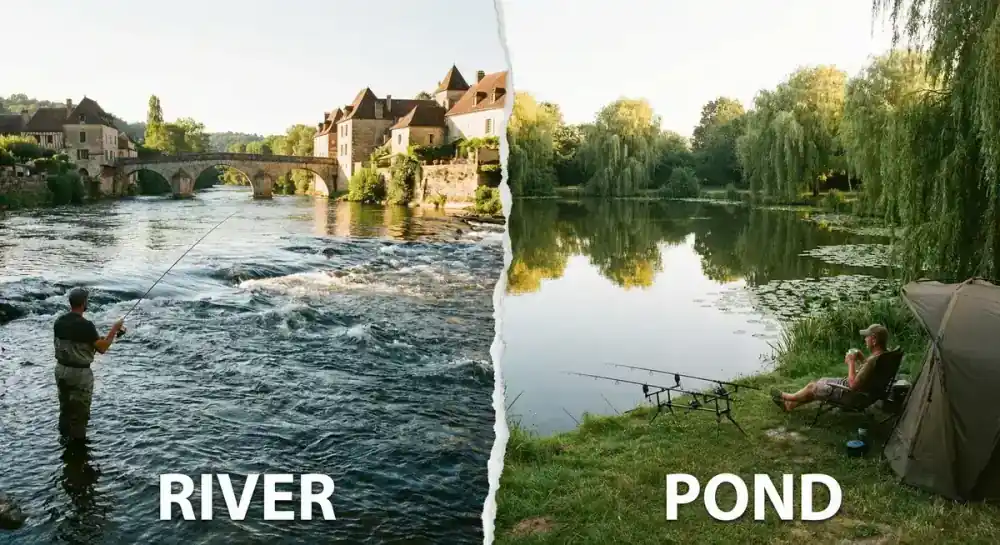
On a river such as the Lot, do not base every decision on air temperature. Look at water level, colour, wind direction and the time of day when fish show themselves. A short feeding window, properly used, is more valuable than changing rigs every half hour.
Read the River Lot before casting
Walk the bank before setting up. Shows, rolling fish, repeated bubbles and movement near a depth change are useful clues, but they need context. A fish showing in open water is not always feeding there.
Identify current seams, quiet margins, submerged cover, changes of depth and places where natural debris collects. If you use a boat while following local rules, map two or three clean areas rather than trying to cover the entire river. Reliable reference points make a better session than constant searching.
Keep one rod on a dependable area and use another to test a margin or depth change. You keep a chance of a bite while learning what the river is doing.
Swims worth prioritising
Carp commonly use repeatable routes between resting water and feeding areas. In autumn, slightly deeper water can become attractive after cold nights, while a sunny margin may still produce during the day. Choose a position because you can present a rig safely and play a fish well, not only because it looks good.
Calm margins, clean depth changes and the sheltered side of a current seam are sensible starting points. Near snags can be productive too, but only when your tackle and landing plan are suited to the situation.
Accurate feeding over heavy feeding
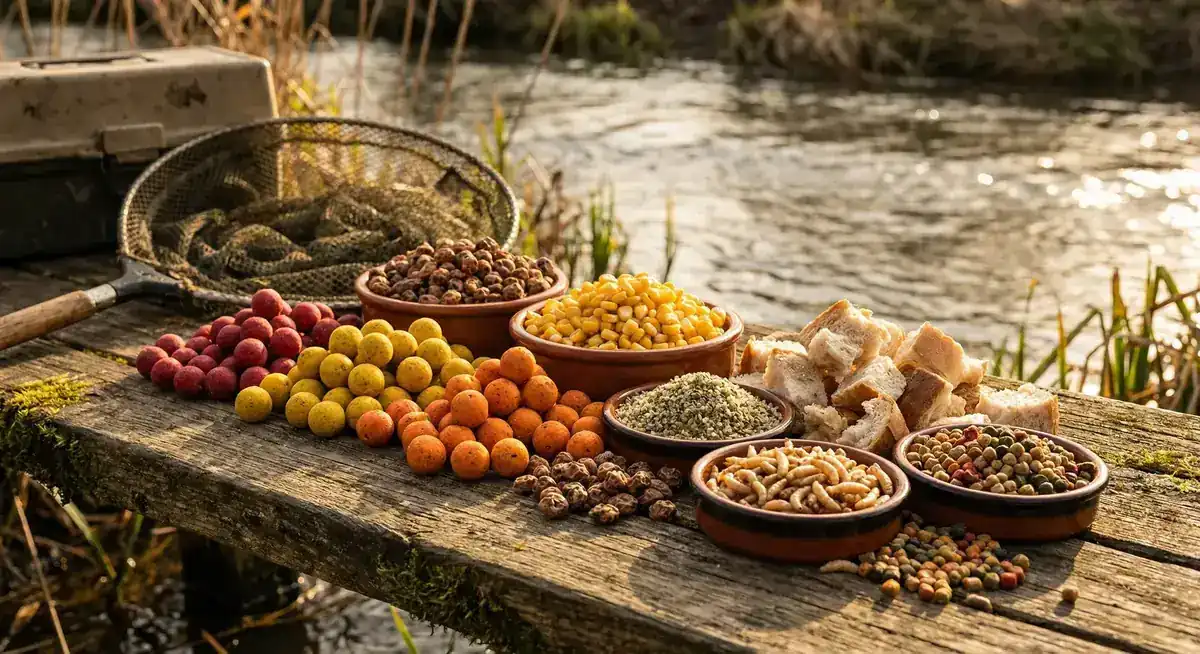
A two-day session is not a competition to put in the most bait. Start with an amount you can monitor: a few boilies, prepared particles, pellets and maize can be enough to create confidence. Then adjust to signs of feeding, nuisance fish and the number of genuine opportunities you receive.
A compact, repeatable area is usually easier to understand than a large carpet of bait. If bites are spaced but regular, avoid resetting everything. If action stops, first change the presentation or position of one rod before dramatically increasing the feed.
Use only properly prepared bait and leave no line, packaging or unused bait on the bank.
Rigs, tackle and bait
A simple rig that is checked after every fish will outperform a complicated rig that is not presented cleanly. Match the lead to the flow, use line that is appropriate for the snags and keep hook points immaculate. Test your presentation close in before sending it to a distant marker.
Fruity, fishmeal or spicy boilies can all work when they match your feed. Keep one rod more discreet with a single hookbait or a lightly balanced bait for wary fish. Make a note of time, depth, exposure and bait for every chance; those notes quickly become more useful than guesswork.
A practical 48-hour plan
Use the first hour to observe and prepare your swim. Place two rods on the clearest options and keep a third in searching mode. After the first night, use what you have learned instead of restarting from zero: a missed run, a movement on a margin or a displaced rig are all information.
On the second day, focus your feed around the area that produced the clearest signs and retain one exploratory option. Pack for comfort as well as fishing: warm layers, lighting, a wet unhooking mat and fish-care equipment should be ready before any run. A good session is one that is safe for both fish and angler.
Planning a fishing break on the Lot
Autumn is a fine time for a weekend or longer fishing break without the high summer heat. Check availability before building your plan, then pack for the actual forecast and duration of your stay. At Gîte du Martin Pêcheur, the private pontoon and proximity to the water keep the focus on observation rather than travel.
Check the available dates, then tell us when you would like to come and what type of fishing you are planning. We can share the practical information you need before arrival.