
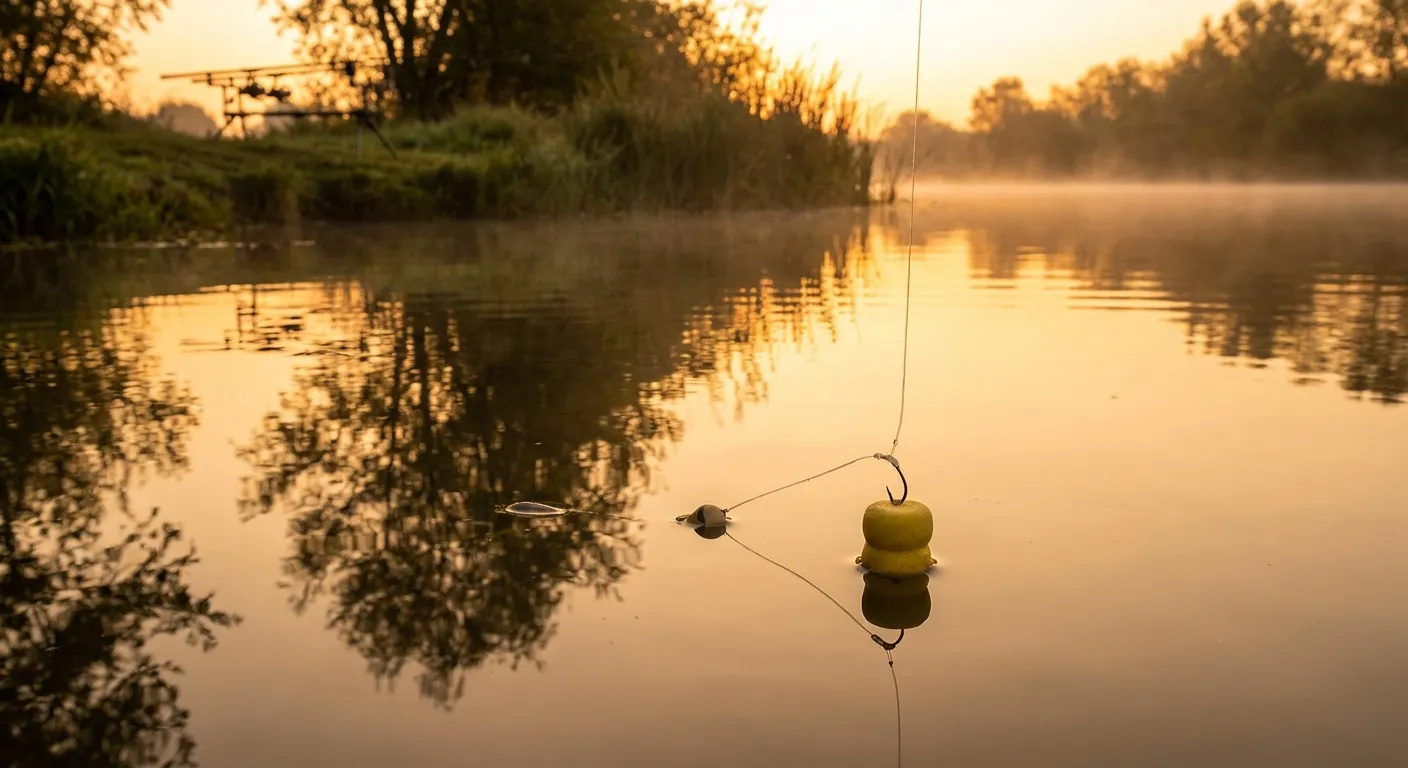
The zig-rig: fishing carp on the surface
The zig-rig: fishing carp on the surface
The zig-rig is a sophisticated technique that presents a floating bait at a variable depth in the water column, imitating insects or floating debris that carp feed on. Invented in England, this approach allows catching carp in mid-water, often wary specimens that ignore bottom setups. On the Lot at Aiguillon, the zig-rig comes into its own in calm areas, holes and margins where carp move in surface or mid-water.
The Lot river offers varied conditions: slow-flow areas, deep holes and sheltered margins where carp regularly rise to the surface, especially in summer and spring. From the pontoon of Gîte du Martin Pêcheur, you can target carp swimming in mid-water or surface feeding. The zig-rig requires observation, patience and good water reading — a technique for experienced anglers but extremely rewarding.
What you need
12 ft carp rod, parabolic action
A soft rod to cushion surface carp runs. 2.75 to 3 lb test curve. Zig-rig fights are often explosive.
Monofilament or fluorocarbon line
The zig-rig uses a floating or neutral hooklink. Main line in 25/100 mono, 15-20 lb fluorocarbon hooklink for discretion.
Zig bugs, pop-ups and floats
Zig bugs in various colours (white, yellow, orange), 8-12 mm pop-ups, or floating boilies. Zig floats to set the depth.
Inline or bullet lead
10 to 30 g lead to hold the setup. The zig-rig works with a light lead that allows the bait to drift naturally.
Fine hook and zig needle
Size 8 to 12 fine wire hooks for zig bugs. Zig needle for threading floating baits onto the hair.
Rigging and practice
Spot carp on the surface
Observe the water: carp surface feeding, bubbles, dorsal fins breaking the surface. On the Lot, carp often rise in late afternoon and at dawn. Note the areas where they move.
Set the zig depth
Depth varies from 30 cm below the surface to 1.5 m depending on carp activity. Use a zig float or measure with a stick. For pure surface, 15-30 cm is enough. For mid-water, 60 cm to 1 m.
Assemble the zig-rig
Mount a zig bug or pop-up on the hair. The hooklink must be longer than the target depth. Inline lead 30-50 cm from the hook. The setup must drift naturally.
Cast and position
Cast gently so as not to spook the carp. Position the bait in the activity zone. On the Lot, carp can be very wary: avoid repeated casts to the same spot.
Monitor and adapt
Keep the rod in hand or within reach. Takes are often subtle. If no activity in 1-2 h, change depth or bait colour. Lot carp respond well to white and yellow.
Practice this technique with us
The private pontoon of Gîte du Martin Pêcheur offers a clear view over the Lot, ideal for observing surface carp. The holes and margins in front of the lodge regularly attract carp in mid-water and on the surface, especially in summer. Hamid knows the habits of carp in the area and can point you to the best times and spots for the zig-rig. This advanced technique requires perseverance: 12 to 48 hour sessions allow observation and adjustment. The calm of the place favours the discreet approach needed for the zig-rig.
Book your stayCommon mistakes
Zig too deep or not deep enough
Observe where the carp are swimming. If they're surface feeding, the zig should be at 15-30 cm. If they're in mid-water, set to 60 cm-1 m. Adapt according to refusals.
Casting too often
Each cast can spook the carp. Cast once, wait. If you must recast, change zone or wait for the carp to return.
Line sinking and pulling the bait
A sinking line can pull the zig down. Use a floating hooklink or treat the line with floatant. Keep a slight bow to let the bait drift.
Unsuitable bait colour
In clear weather, prefer white or yellow. In grey weather, orange or fluo can attract. Try several colours if carp refuse.
Your questions about this technique
When to fish the zig-rig on the Lot?
The zig-rig is most effective from May to September, when carp rise to the surface. The best times are dusk, dawn and hot days with little wind. In winter, the technique is less productive.
What depth for the zig-rig?
Start at 30-50 cm below the surface. If carp are deeper, increase gradually (60 cm, 1 m). Observe where they swim and adapt. On the Lot, 30-60 cm often gives good results.
Does the zig-rig work in current?
The zig-rig is better suited to calm areas. On the Lot, target holes, sheltered margins and slow-flow zones. Strong current makes the bait drift too fast and complicates the presentation.
What baits for the zig-rig?
Zig bugs (foam), 8-12 mm pop-ups, floating boilies. White, yellow and orange colours are the most versatile. On the Lot, white and yellow attract carp well.
How many rods for the zig-rig?
One to two rods maximum. The zig-rig requires monitoring and frequent adjustments. Better one well-placed rod than several neglected ones.