
Clonk fishing: the catfish angler's guide
Clonk fishing: the catfish angler's guide
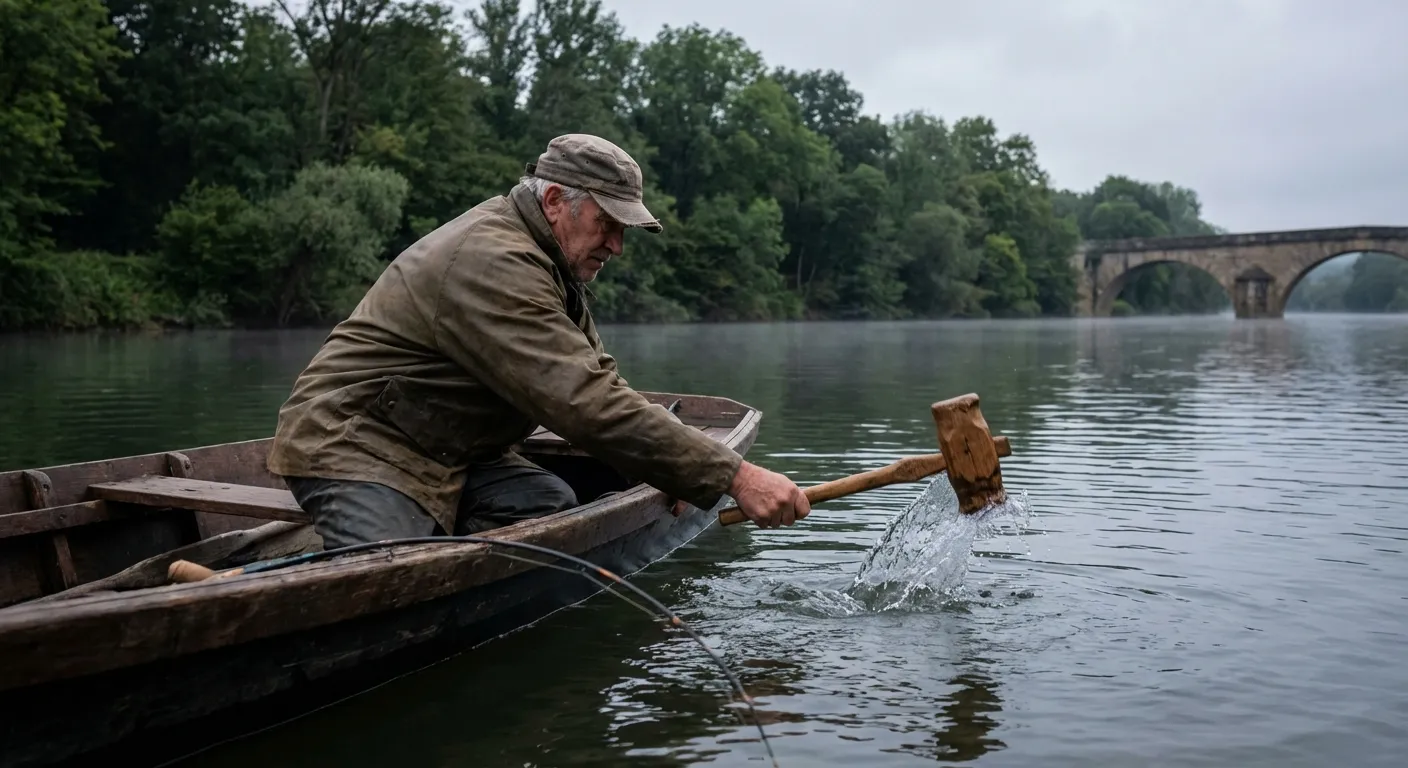
Clonk fishing is an ancestral and spectacular technique that consists of striking the water surface with a wooden instrument to produce deep sounds and vibrations. These waves attract wels catfish, fish with an ultra-sensitive lateral line, which rise from the depths to investigate the source of the noise. Originating from Central Europe, this method has won over French catfish anglers and finds at the Lot, at the confluence with the Garonne near Aiguillon, one of its most prestigious playgrounds.
The Lot-Garonne confluence is indeed one of France's best wels catfish spots. The deep waters, varied currents and abundance of forage fish create an ideal biotope for 2-metre-plus wels catfish. From the private pontoon of Gîte du Martin Pêcheur, you have direct access to these legendary waters. Hamid, your host and catfish enthusiast, knows every hole and spot in the area. Clonk fishing requires technique and experience, but the sensations it provides — seeing a 2-metre catfish emerge a few metres from you — remain unforgettable.
What you need
Wooden clonk (beech or maple)
Cylindrical or conical instrument 30 to 50 cm, weighted at the base. Dense wood produces deep penetrating sounds that carry far underwater.
Catfish rod 3.50 to 4.20 m
Parabolic action to cushion runs. Casting 150-250 g. A rod that's too short limits control of large catfish in the margins.
Casting or spinning reel
200 m capacity of 40/100 braid minimum. Progressive and robust drag. Casting reel offers more precision for casts.
40 to 50/100 braid
No mono: braid transmits takes better and resists bottom abrasion. Fluorocarbon hooklink for discretion.
Surface lures (poppers, stickbaits)
Floating lures 15-25 cm, imitating fish or amphibians. Natural colours (bleak, roach) work well on the Lot.
Rigging and practice
Locate suitable spots
Clonking is done from a boat, ideally over holes 4 to 12 metres deep, confluences or moderate current zones. On the Lot at Aiguillon, holes downstream of the Lot-Garonne confluence and channel margins are prime spots. Use a fish finder to locate catfish before clonking.
Clonk striking technique
Hold the clonk vertically, base immersed. Strike the surface with short regular movements: ploc-ploc-ploc. Alternate rapid sequences (10-15 strikes) and 30-second pauses. Catfish can take 5 to 20 minutes to rise.
Position the lure
Cast your surface lure 5-15 m from the boat, in the zone where you're clonking. Leave it still or animate with small twitches. The catfish, attracted by the clonk, spots the lure and attacks.
Handle the take and fight
The take is often violent: the catfish explodes on the surface. Strike firmly and keep the rod high to prevent it diving under the boat. The fight can last 10 to 30 minutes for a large specimen.
Respect the fish
Handle the catfish with care, ideally in the water. Quick photos, measure, then release. Lot catfish are a precious resource; catch-and-release is the norm among responsible catfish anglers.
Practice this technique with us
Gîte du Martin Pêcheur has a private pontoon on the Lot, a few cable lengths from the Lot-Garonne confluence, one of France's most renowned wels catfish spots. Hamid, your host, has practised clonk fishing for years and knows the holes where 2-metre-plus catfish move. A boat is necessary for this technique; rentals are available nearby. The lodge is an ideal base for 4 to 12 hour sessions on these exceptional waters.
Book your stayCommon mistakes
Clonking too hard or too fast
Strikes that are too violent or too close together spook catfish. Prefer a regular, moderate rhythm. Patience is key.
Giving up too soon
A catfish can take 15 to 30 minutes to rise. Stay focused and continue clonking in sequences. Change zone after 45 minutes without result.
Poor line management
Trailing line or knots prevent effective striking. Maintain constant tension and use a well-set reel to recover slack quickly.
Neglecting weather conditions
Clonking works better in stable weather, calm or slightly choppy water. Avoid storms and strong winds that disturb sound propagation.
Your questions about this technique
Is clonking allowed on the Lot?
Yes, clonk fishing is allowed on the Lot. However check the Lot-et-Garonne Fishing Federation regulations for any local or seasonal restrictions.
What is the best period for clonking?
The warm season (May to September) is most productive. Catfish are active on the surface. At the Lot-Garonne confluence, dusk and clear nights are particularly favourable.
Do you need a boat for clonk fishing?
Yes, clonking is done from a boat to access holes and move between spots. Barque or boat rentals are available near Gîte du Martin Pêcheur.
What size catfish can you catch with clonking?
Catfish from 1.50 m to over 2.50 m are regularly caught clonking on the Lot. The Lot-Garonne confluence holds record specimens.
Does the clonk attract other fish?
The clonk is specific to wels catfish. Its frequency and type of vibration target the wels catfish lateral line. Other species don't react to this technique.