The wels catfish: giant of freshwater
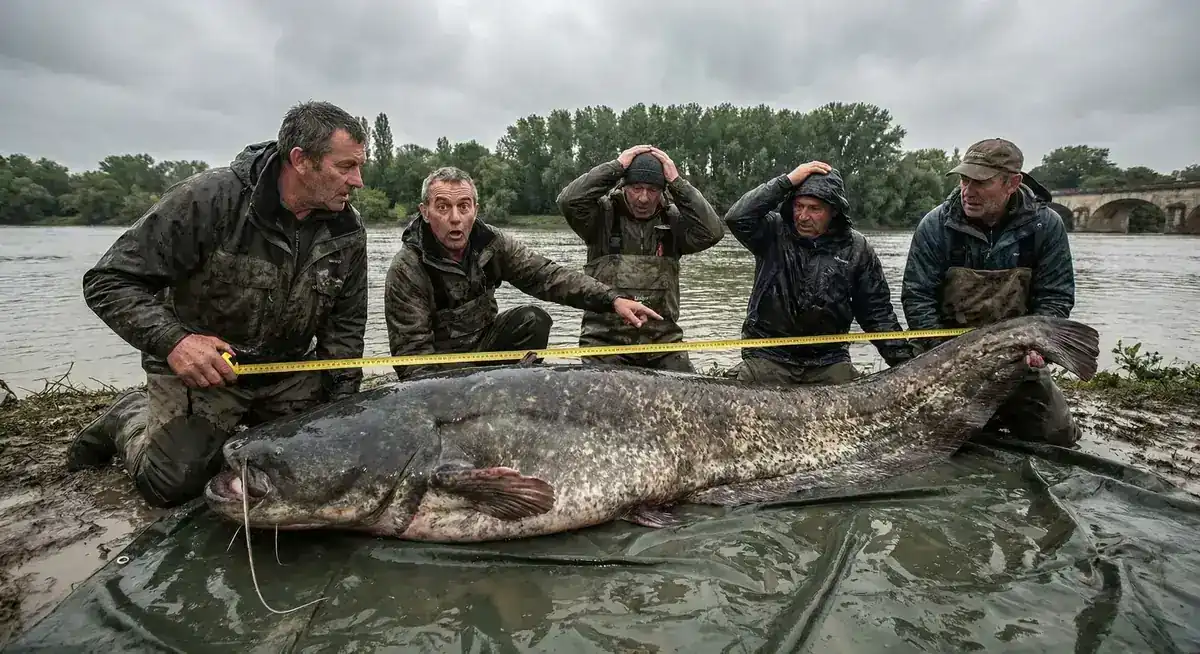
The wels catfish (Silurus glanis) is the largest freshwater fish in Europe. Native to the Danube basin, it colonised French waters from the 1980s and is now present in most major rivers. An adult catfish can exceed 2.75 metres and 130 kg. The French record, set in 2025 in the Tarn, reached 2.79 metres. This nocturnal, opportunistic predator fascinates anglers seeking strong sensations. Getting started with catfish fishing requires suitable tackle and a good knowledge of techniques, but the reward matches the effort: a catfish take remains an unforgettable moment.
Understanding the catfish to fish it better
The catfish is a nocturnal and crepuscular fish. Solitary and territorial, it holds fixed positions: deep holes, rocky areas, bridge piers, wrecks. Its six barbels (two long under the chin, four shorter) allow it to detect vibrations and scents in murky water. An opportunistic predator, it feeds on fish, crayfish, and sometimes small mammals or birds. Its growth is rapid up to 1.50 m, then slows. A 2-metre catfish can be 30 years old or more. Understanding its behaviour helps locate it: it favours calm areas, confluences and structures that concentrate prey.
Techniques for beginners
Several techniques allow you to catch this predator. Here are the main ones for beginners:
- 1Clonk fishing: A wooden instrument struck on the surface imitates the sound of prey. The vibrations attract the catfish's curiosity. An ancestral and very effective technique.
- 2Vertical with sonar: Locate holes with a fish finder, then lower a soft lure vertically. Ideal for targeting catfish on their holding spots.
- 3Live bait: The classic technique. A live fish (roach, bream, crucian carp) mounted on a robust trace, fished on the bottom. From the bank or pontoon.
- 4Soft lure (shad 15–25 cm): Cast and retrieved slowly on the bottom, or presented vertically. Shads with undulating tails imitate forage fish.
- 5Fireball: A live bait presented on the bottom with a specific rig. This freshwater giant sucks in the bait. An effective technique on rivers.
Beginner catfish tackle
Catfish demands robust tackle. Here is the basic equipment:
- 1Catfish rod: 2.40 to 2.70 m, 200–300 g test. Parabolic action to cushion runs. Shock resistance is essential.
- 2Robust reel: 50–80/100 capacity (50–80 lb or 100 lb braid). Powerful front drag. This freshwater giant shows no mercy.
- 3Portable fish finder: To locate holes and structures. A simple model is enough to start.
- 4Handling gloves: Essential. Barbels and catfish skin can cause cuts. Hand protection is indispensable.
- 5Long-nose pliers: To unhook safely. This predator has a large mouth.
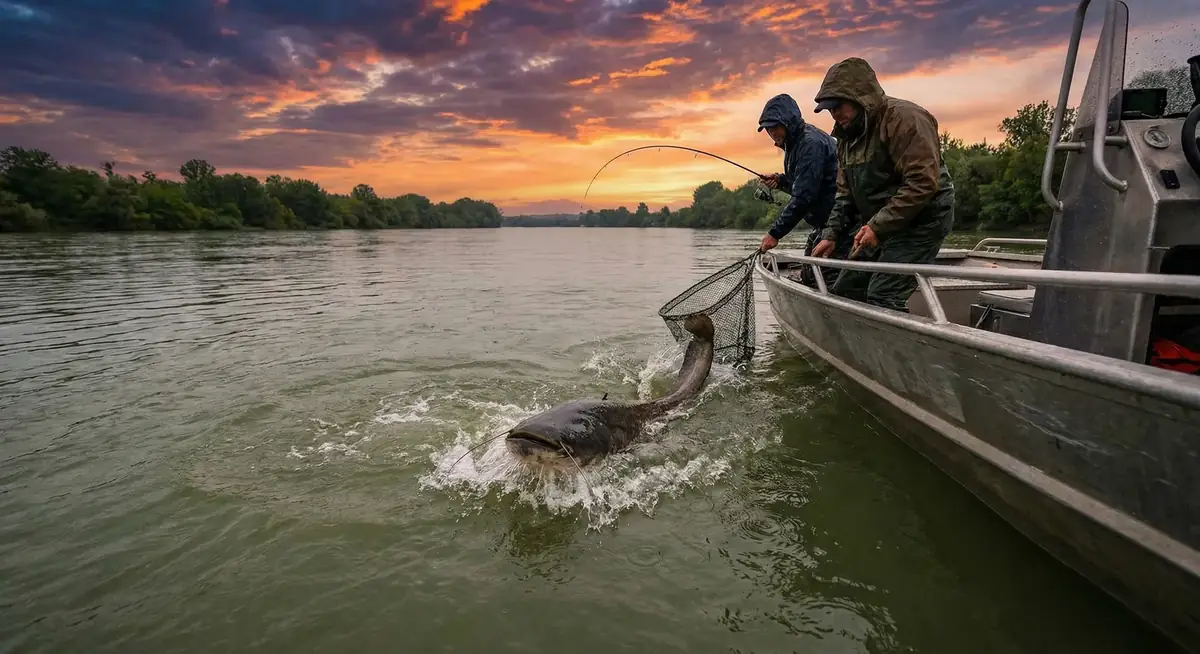
- 6XL landing net or boga grip: For big specimens, a standard net is not enough. The boga grip allows you to lift the fish by the jaw.
Where to fish for catfish in France?
This species populates France's major rivers. The Rhône, Saône, Tarn, Garonne and Lot are top venues. Confluences concentrate this species: the meeting of two watercourses creates holes and currents that attract prey and predators. Bridge piers, deep rocky areas and wrecks offer ideal hunting spots. Specimens over 2 metres are regular in the Tarn, Rhône and at the Lot–Garonne confluence.
The Lot–Garonne confluence at Aiguillon is one of France's best sectors for this predator. Holes of 6 to 12 metres concentrate the big specimens.
The best periods
This predator is fished from March to October, with a peak in activity from June to September. In summer, night fishing is often more productive: silurus glanis hunts under cover of darkness. Below 8 °C, it barely feeds. July and August offer the best conditions. After a storm or flood, murky water can trigger intense feeding activity.
Handling a catfish safely
This freshwater giant must be handled with care. Gloves are essential: barbels and abrasive skin can cause cuts. Watch out for pectoral spines, which are very sharp. For big specimens (over 1.50 m), two-person handling is recommended. Keep the fish in the water as long as possible and release it quickly. A wet unhooking mat protects the mucus. This species is not dangerous to humans, but its size and strength demand respect.
Catfish fishing at Gîte du Martin Pêcheur
The Lot–Garonne confluence at Aiguillon is just a stone's throw from Gîte du Martin Pêcheur. Holes of 6 to 12 metres concentrate specimens of 1.50 to 2 metres. Night swims are accessible, and a boat can be used to prospect the best spots. Hamid, your host, practises this activity and can point you to the most productive sectors. Regular specimens of 1.50 to 2 metres, in an exceptional setting on the banks of the Lot.