
Fireball technique for catfish
Fireball technique for catfish
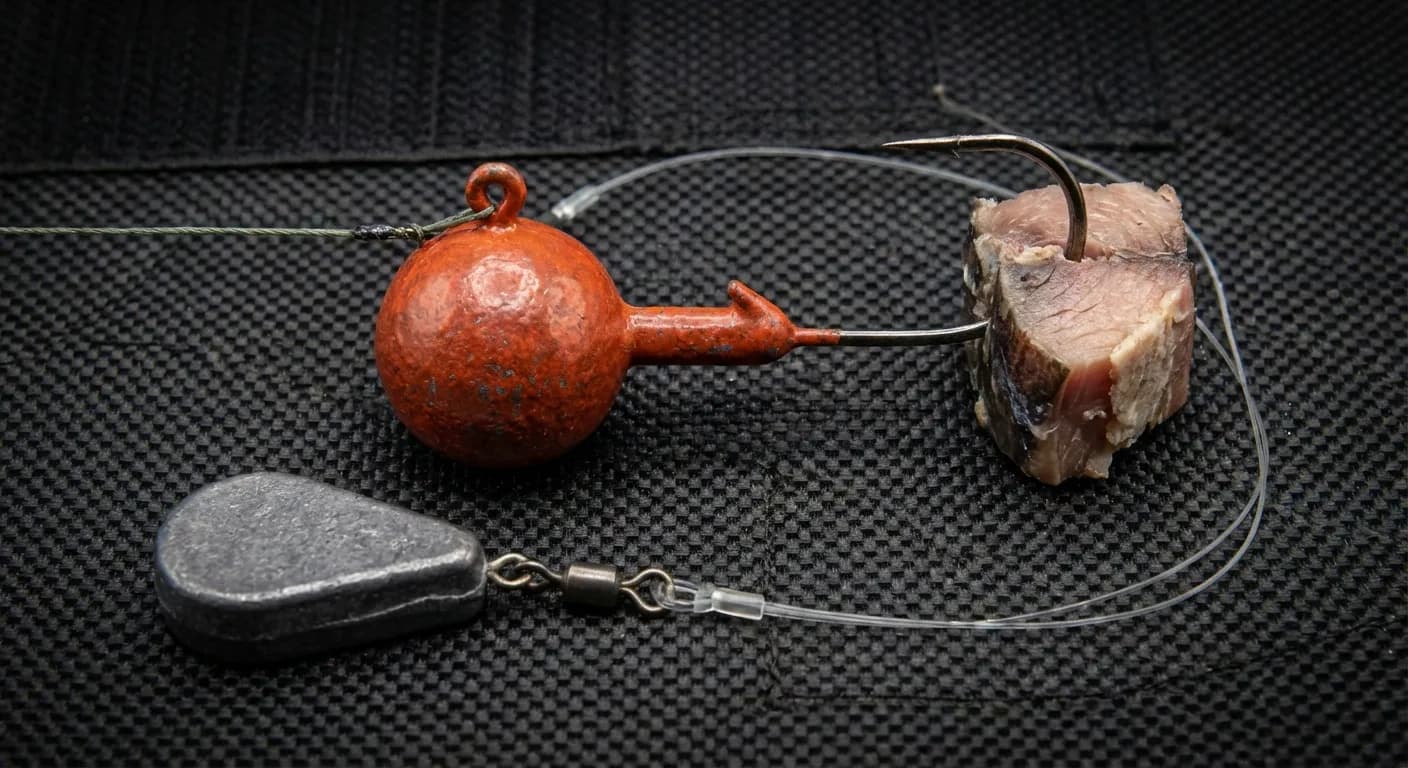
The fireball technique is a setup specific to catfish that combines a spherical lead (fireball) with a hooklink and bait (live bait, dead, or lure). The lead, rolling on the bottom, produces vibrations and raises particles that attract catfish. This effective method is practised from the bank or pontoon and suits particularly waters with moderate current like the Lot.
On the Lot at Aiguillon, the fireball technique finds its full effectiveness. The varied bottoms — gravel, sand — allow the fireball to roll well and diffuse attractive signals. The private pontoon of Gîte du Martin Pêcheur offers an ideal spot for this technique. Hamid, your host, uses it regularly and can initiate you. 2-metre-plus catfish, attracted by the vibrations, come to investigate the bait. A technique to discover for varying approaches.
What you need
Fireball leads 80-150 g
Lead or steel spheres, sometimes grooved for more vibrations. Weight adapted to current: 80-100 g in calm water, 120-150 g in current.
Catfish rods 3 to 3.60 m
150-250 g casting, parabolic action. Heavy carp rods can work. Casting suited to setup weight.
Hooklink and hooks
50-60 lb fluorocarbon or steel. Size 2/0 to 4/0 treble or single hooks for catch-and-release. Hooklink length: 40-80 cm.
Baits (live, dead, lure)
Live bait (roach, bream), dead fish (mackerel head, lamprey) or large soft lure. The bait must resist current.
Reel and line
40/100 braid or 50/100 mono. 200 m capacity. Well-set drag for violent catfish runs.
Rigging and practice
Assemble the fireball setup
Thread the fireball onto the main line. Add a bead protector, then fix the hooklink with a knot or swivel. The fireball must slide freely. Fix the bait on the hook.
Choose the spot
Target holes, current margins and mixed bottom zones (gravel/sand). From the pontoon of Gîte du Martin Pêcheur, zones at 40-70 m are often productive. The fireball rolls better on hard bottom.
Cast and let drift
Cast the setup. The fireball descends and rolls with the current, diffusing vibrations. Let drift 5-15 m then retrieve slowly. Repeat to prospect the zone.
Detect the take
The take can be a sharp strike or a run. Use a bite alarm for waiting sessions. The catfish often takes the bait during fireball movement.
Strike and fight
Let the catfish swallow a few seconds if the take is progressive. Strike firmly. The fight is identical to other techniques: rod high, drag set, patience.
Practice this technique with us
Gîte du Martin Pêcheur, on the Lot at Aiguillon, has a private pontoon perfect for the fireball technique. The bottom in front of the lodge and at the Lot-Garonne confluence suit fireball rolling well. Hamid, your host, can point you to the best spots for practice. 2-metre-plus catfish are regularly caught on fireball in this sector. 4 to 12 hour sessions allow good prospecting and alternating with other techniques.
Book your stayCommon mistakes
Fireball too light
An undersized fireball drifts too much and doesn't stay on bottom. Adapt weight to current: minimum 100 g on the Lot.
Hooklink too short
A hooklink under 40 cm limits bait freedom. Prefer 50-80 cm for natural presentation.
Not letting it drift
The fireball must roll to attract. Too fast retrieve or static setup reduces effectiveness. Let the current work.
Poor quality bait
A tired live bait or too soft dead bait doesn't hold. Use fresh resilient baits to maximise chances.
Your questions about this technique
What is a fireball?
A fireball is a spherical lead used in catfish fishing. Rolling on the bottom, it produces vibrations that attract catfish. It combines with a bait (live or dead) on a hooklink.
Does the fireball work in calm water?
Yes, but it's more effective in moderate current where it rolls naturally. In calm water, slow retrieve can simulate the movement.
What bait with the fireball?
Live bait (roach, bream), dead fish (mackerel head, lamprey) or large soft lure. The bait must hold on bottom and resist handling.
Fireball or classic lead?
The fireball offers an attractive advantage through its vibrations. On the Lot, where catfish are numerous but sometimes wary, this difference can be decisive.
Can you fish fireball at night?
Yes, the fireball technique works day and night. Catfish hunt at night; combine fireball and night session to maximise chances.