Why autumn can be a key period for pike
As water gradually cools in autumn, baitfish movements often change and predators move with them. That does not make pike automatically easy to catch: flow, water clarity, angling pressure and available prey still determine their position. But clear, concentrated feeding windows can develop and reward a methodical approach.
Avoid searching for one magic lure. Instead, build a simple picture: where can baitfish shelter, which bank is protected, and where can you present a lure cleanly? On a river, a change in level or a fresh wind can alter that picture within hours. Staying mobile and alert is usually more productive than repeatedly casting a lifeless area.
Reading the river and choosing areas
Start with places that naturally hold bait: slack-water entrances, current seams, vegetated margins, submerged timber, depth changes and the edges of cover. The quietest water is not automatically best; look for an area where small fish can hold without constantly fighting the flow. A brief swirl, moving bait or a hunting bird are all useful pieces of information.
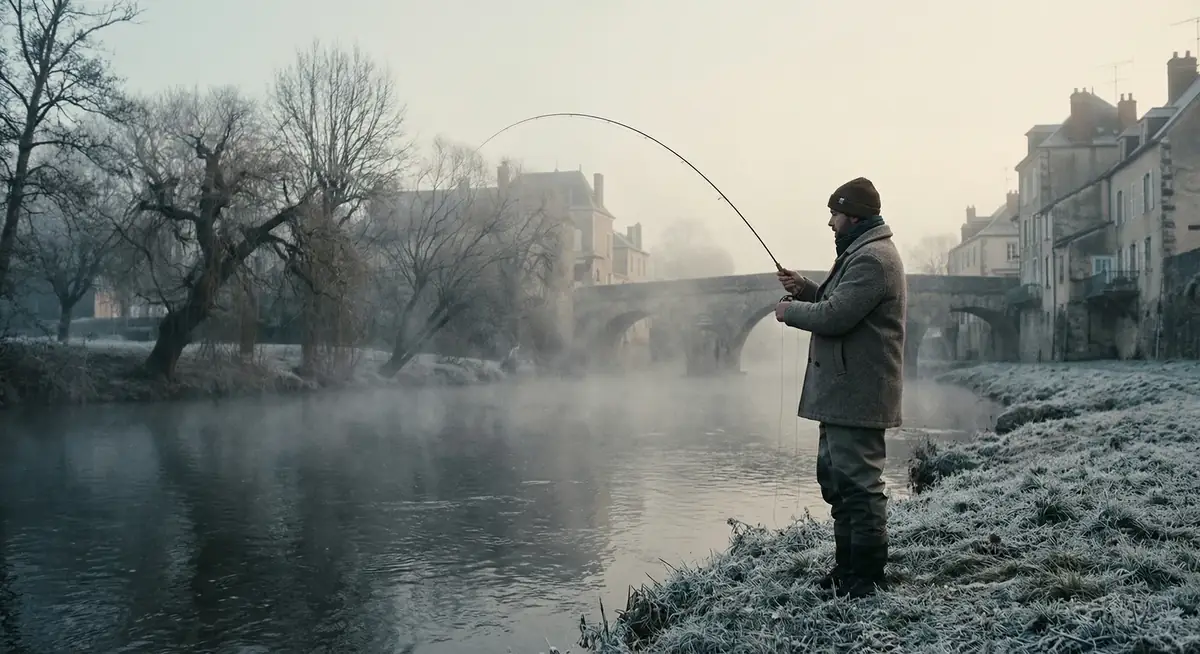
On the River Lot, a shaded bank can remain attractive after a cold night, while a sun-exposed area may wake later in the day. Work angles rather than casting randomly into the channel. A path that follows a drop-off, runs beside cover or exits a back-current is easier to control and repeat.
- 1Slack-water entrances and exits: work them from more than one angle.
- 2Covered margins: rewarding only with suitable tackle and a safe landing plan.
- 3Drop-offs and plateaux: check them when baitfish leave the banks.
- 4Wind-blown banks: test them when they push bait into a fishable shore.
Lures and retrieves: start with a clear presentation
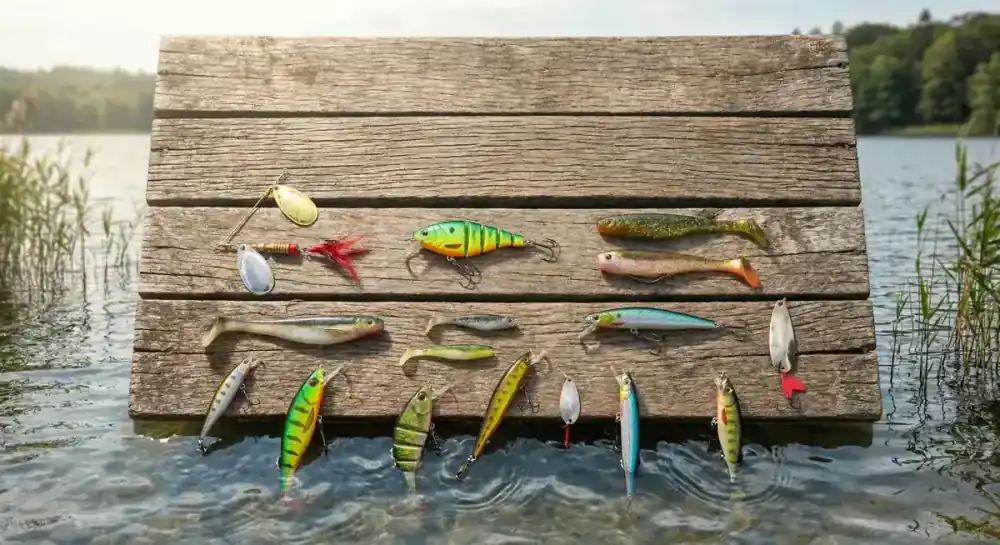
A large soft lure, jerkbait, spinnerbait or hard lure can all take autumn pike. Size and vibration matter less than the way a lure passes through the fish's holding area. Start with a retrieve you can control: a slow pass near cover, pauses over a depth change or a steady track along a margin.
If pike follow without committing, adjust speed, angle or pause length before changing your entire box. In coloured water or stronger flow, a lure that displaces more water can make sense. Keep a more subtle option ready so you can compare two meaningful approaches rather than making random changes.
Record water level, colour, time and lure choice for every follow or take. A few sessions of notes are more useful than a generic rule.
Weather, light and activity windows
There is no universal pike hour. Early morning and late afternoon are sensible starting points because light is lower and banks are often quieter, but wind, cloud cover or a slight temperature rise can create a daytime window. Plan to fish actively when conditions line up instead of assuming the clock alone will decide the session.
Look for change rather than isolated numbers: an approaching front, a shift in wind, water colouring after rain or falling light. Once you identify a window, slow down and revisit the best-looking areas with different tracks. One contact can reveal a pattern for the rest of the day.
| Condition | Approach to try | Keep in mind |
|---|---|---|
| Calm morning | Slow work along margins and weed | Approach quietly |
| Wind and cloud | Search wind-blown banks and current exits | Keep control of the line |
| Coloured water | Visible or vibratory lure close to cover | Do not sacrifice presentation |
| After a level change | Find new slack water and refuge areas | Check access and safety |
Fish care and safety at the water
Pike are powerful, sharp-toothed fish and are often caught close to cover. Have forceps, a landing net and a suitable wet unhooking surface ready before the first take. Use a trace suited to pike fishing, check clips and abrasion points regularly, and do not prolong a fight when a fish is heading for snags.
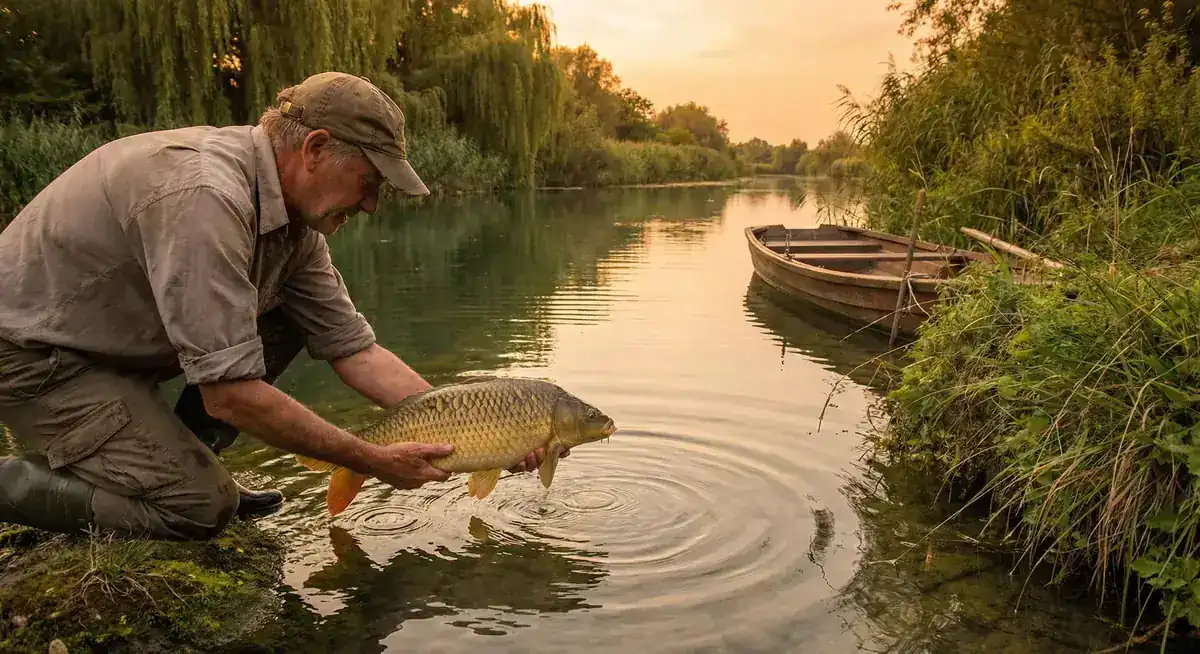
Keep the fish wet, handle it carefully and support it facing the current until it leaves under its own power. Rules, dates and local conditions can vary by fishery and year, so verify the official information for your chosen water before fishing.
Predator-fishing dates, sizes and local rules vary. Check the official local information before planning a session.
Planning a predator-fishing break on the Lot
A successful autumn session is light and mobile: waterproof layers, a focused lure selection, forceps, landing net and a way to record your observations. Reserve your active fishing time for the most promising light and weather rather than trying to cover every hour without purpose.
At Gîte du Martin Pêcheur, direct access to the Lot and the private pontoon make early-morning and late-afternoon observation straightforward. Check available dates, then tell us when you plan to come and what fishing you have in mind so we can share practical arrival information.