Installing your rod pod: tips
Installing your rod pod: tips
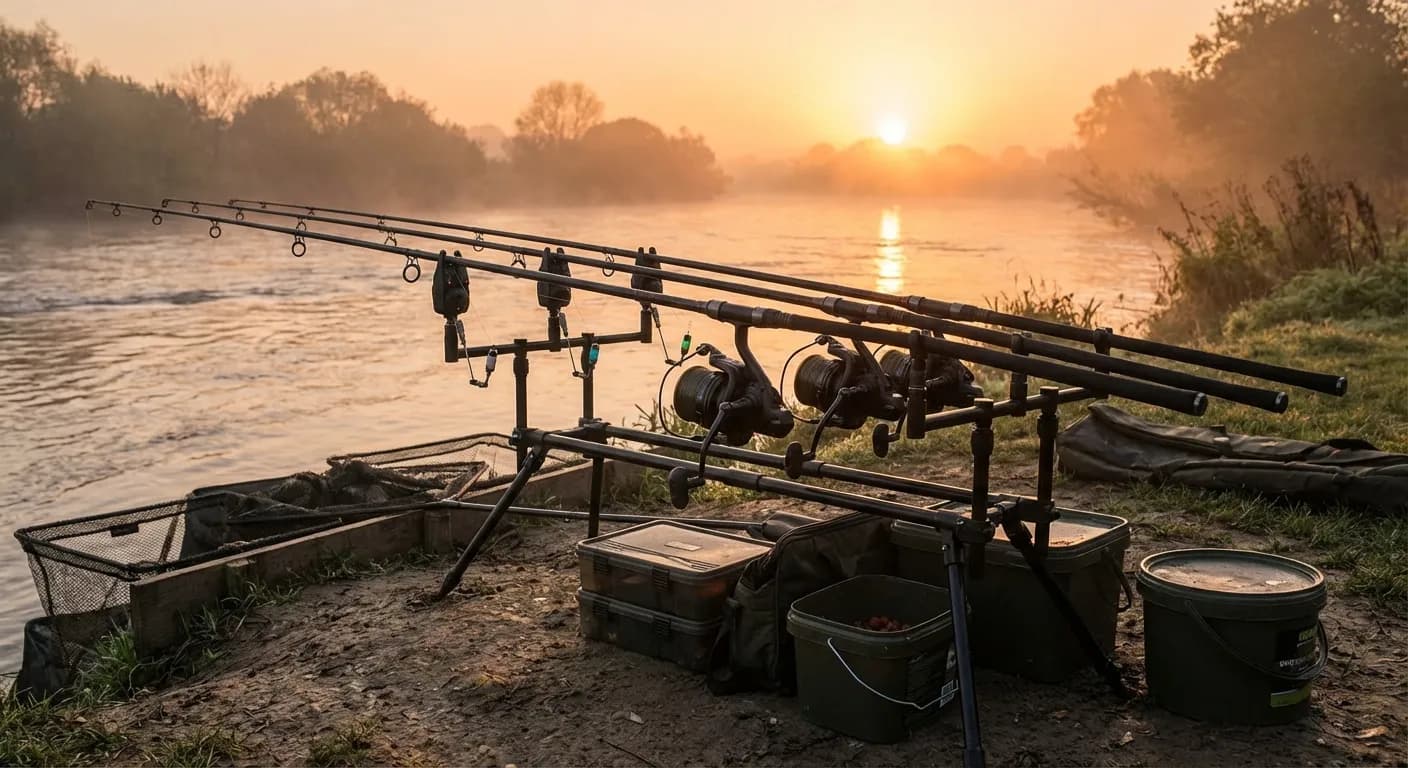
The rod pod (or rod support) is the central element of your carp setup. It holds the rods stable, supports bite alarms and ensures precise positioning of setups. A well-chosen and well-installed rod pod improves comfort, reduces false contacts and maximises strike chances. On the Lot at Aiguillon, a rod pod suited to the pontoon and bank conditions is essential.
The private pontoon of Gîte du Martin Pêcheur offers a stable surface for installing your rod pod. Unlike natural banks sometimes unstable, the pontoon allows solid, level installation. Hamid can point you to local shops for suited equipment. A well-adjusted rod pod = well-positioned rods = better take detection.
What you need
3 or 4 rod pod
Aluminium or steel rod pod, 3 or 4 supports. Models adjustable in height and angle adapt to all terrains. Prefer stability over lightness.
Banksticks or tripods
Alternative to rod pod: individual banksticks or tripods. Lighter, suited to natural banks. On pontoon, rod pod is preferable.
Buzzer bars
Bars for fixing bite alarms. Some rod pods integrate buzzer bars. Check compatibility with your alarms.
Sand bags or anchors
To stabilise the rod pod on soft ground or pontoon. Sand bags avoid vibrations and false contacts.
Rigging and practice
Choose the suited rod pod
For the pontoon of Gîte du Martin Pêcheur: 3-rod pod with adjustable legs. Pontoons are generally flat, a standard rod pod works. For natural banks, prefer models with long adjustable legs.
Position and level
Place the rod pod facing the fishing zone. Level with adjustable legs so rods are horizontal. An inclined rod can create false contacts.
Install the alarms
Fix alarms on buzzer bars or supports. The line must pass correctly through each alarm. Check rods are well aligned.
Check stability
Shake the rod pod slightly: it must not move. If needed, add sand bags or anchors. A stable base = fewer false contacts.
Practice this technique with us
The private pontoon of Gîte du Martin Pêcheur is the ideal platform for installing your rod pod. Flat, stable surface, directly facing fishing zones. Hamid will welcome you and can point you to the best spots to position your setup. A well-installed rod pod on the pontoon guarantees comfortable sessions and reliable take detection.
Book your stayCommon mistakes
Unstable rod pod
A rod pod that moves causes false contacts and unwanted alarms. Level correctly, use sand bags if needed. Stability is priority.
Poorly aligned rods
Rods that cross or don't point towards the fishing zone complicate detection. Align rods neatly, space them to avoid tangles.
Unsuitable height
Rods too low: risk of touching water or ground. Too high: discomfort. Adjust height for a 30-45° angle to horizontal.
Forgetting buzzer bars
Without buzzer bars, alarms can be poorly positioned. Check your rod pod accepts alarms or plan adapters.
Your questions about this technique
What rod pod for the lodge pontoon?
A standard 3-rod pod works perfectly. The pontoon is flat and stable. Prefer a model with adjustable legs for fine adjustment. Gardner, Fox or Nash offer excellent models.
Do you need a rod pod for 2 rods?
2-rod pods exist, but a 3-rod pod offers more flexibility if you add a rod later. Individual banksticks can also suffice for 2 rods.
How to avoid false contacts with the rod pod?
Make sure the rod pod is stable and level. Moving legs create false contacts. Use sand bags to anchor. Set alarm sensitivity.
Rod pod or banksticks?
On pontoon: rod pod, more stable and practical. On natural bank: both work. The rod pod is more comfortable for long sessions.
Does the lodge provide a rod pod?
Ask Hamid. Gîte du Martin Pêcheur offers equipment for hire. Bring your rod pod if you have one, otherwise hire can be an option.