
Live bait fishing for predators
Live bait fishing for predators
Live bait fishing is one of the oldest and most effective techniques for catching predators. By presenting a live fish (roach, gudgeon, bleak, minnow) as bait, you exploit the natural predation instinct of pike, zander and perch. This passive but formidably effective approach allows targeting fish in position, often difficult to convince with lures, and suits beginners as well as experienced anglers.
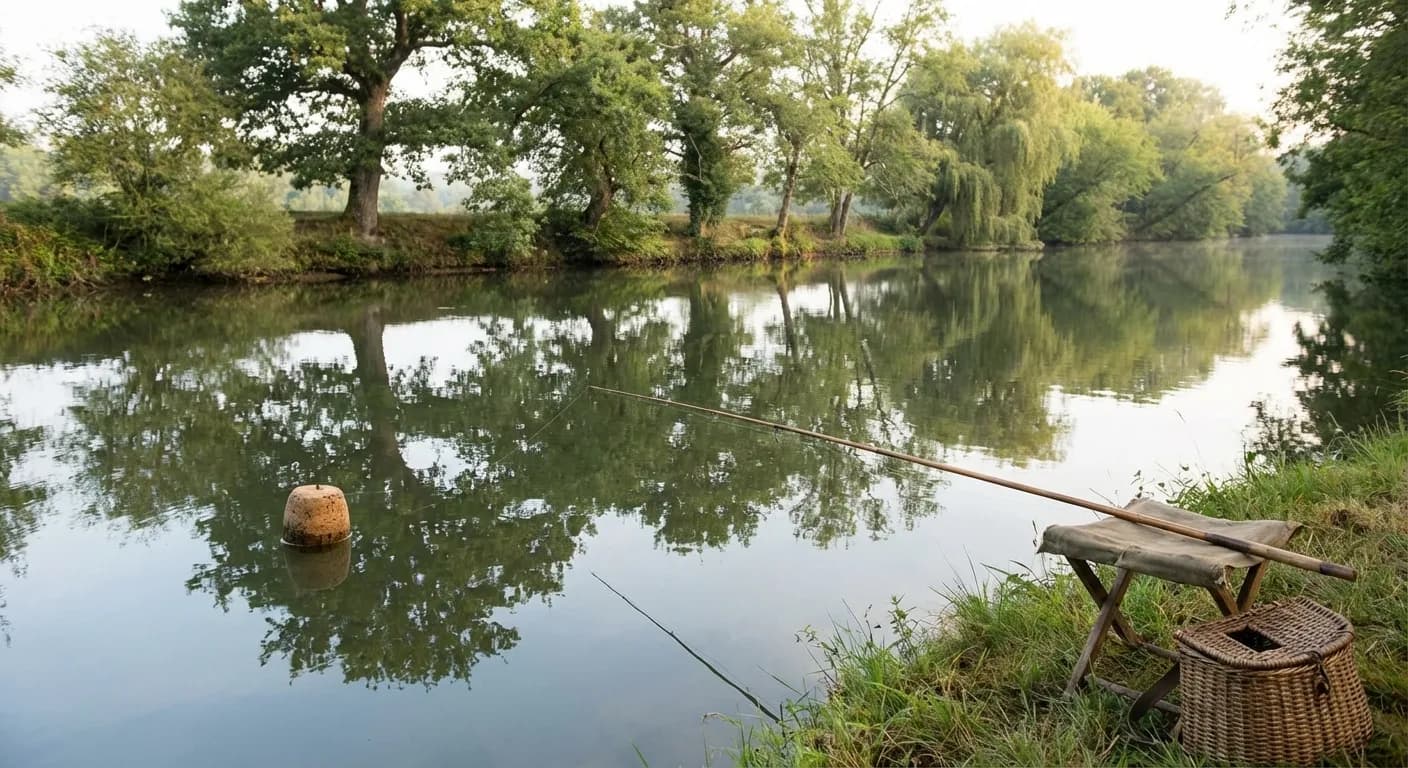
On the Lot at Aiguillon, live bait fishing finds its full place. Cluttered margins attract pike, deep holes shelter zander, and mixed zones (weed beds, rocks) concentrate perch. Roach and gudgeon, abundant in the river, make ideal live baits. The technique can be practised from the pontoon of Gîte du Martin Pêcheur, along the banks or from a boat. Hamid can direct you to the most productive spots and best live bait storage techniques.
What you need
Casting rods 2.70 to 3 m (20-60 g)
Semi-parabolic action to absorb pike runs. Several rods set up multiply chances. Power suited to Lot predators.
Casting or spinning reels
200-300 casting reel for precise casting, or 3000-4000 spinning. 150 m capacity of 25/100 mono minimum. Drag set for runs.
Setup with treble or double hook
Size 6 to 2 treble hooks for pike (fixed on live bait back), size 4 to 2 single hook for zander (lip or nostril). 20-30 lb steel hooklink for pike.
Live bait bucket and aerator
Insulated bucket or aerated keepnet for keeping live baits in good shape. Regular water change. Stressed live baits attract fewer predators.
Bite alarm and supports
Electronic alarms or floats according to setup. Banksticks or rod pod to hold rods. On the Lot, 2-3 rods suffice for an effective session.
Rigging and practice
Get and store live baits
Roach, gudgeon and bleak are most used. Catch them on fine line (worm, maggot) or buy from a shop. Store in a bucket with aerator, fresh water renewed. Avoid overcrowding and stress. On the Lot, roach are easily caught on fine groundbait.
Choose the setup according to species
Pike: steel hooklink, treble hook hooked on live bait back (under dorsal fin), 20-40 g lead according to current. Zander: 25 lb fluorocarbon, single hook on lip or nostril, sliding lead. Perch: lighter setup, size 4-6 hook, small live bait (gudgeon, minnow).
Position lines on spots
Pike: cluttered margins, weed beds, hole entrances. Zander: bottom of holes, breaks. Perch: mixed zones, weed margins. Cast or place gently. Avoid shocks that injure the live bait. Tighten the line and set the alarms.
Monitor and handle takes
Pike can run off on the take. Give it a few seconds to swallow, then strike. Zander takes more gently: watch for micro-movements. Perch gives lively takes. Don't strike too early: the predator must have time to swallow the live bait.
Release and rotate spots
After a catch, change live bait if needed and rest the spot 15-20 minutes. If no take in 1-2 h, move. Lot predators are mobile: prospecting pays.
Practice this technique with us
Gîte du Martin Pêcheur offers ideal conditions for live bait fishing. The private pontoon allows setting 2-3 rods on margins and the hole opposite. Roach and gudgeon are present in the Lot: you can catch them on fine line in the morning before using them as live bait. Hamid knows pike spots (rocks) and zander spots (holes) nearby. Live bait fishing can combine with a lure session: set the live bait rods and prospect with lures while waiting.
Book your stayCommon mistakes
Using live baits in poor condition
A tired or injured live bait attracts fewer predators. Change water regularly, avoid overcrowding, use an aerator. A lively live bait = more takes.
Striking too early
Pike and zander must have time to swallow the live bait. Wait for a clear run (5-10 seconds for pike) before striking. Hasty strike = missed fish.
Forgetting the steel hooklink for pike
Pike cuts mono. A steel or 40 lb fluorocarbon hooklink is mandatory. Avoid break-offs and pike injured with a hook in the mouth.
Staying too long on an empty spot
If no take in 1h30-2h, move. Predators can be on a neighbouring spot. Mobility increases success chances.
Your questions about this technique
Where to get live baits on the Lot?
You can catch roach and gudgeon on fine line (worm, maggot) directly in the Lot. Fishing shops in Villeneuve-sur-Lot and Agen also sell live baits. Hamid can point you to spots for catching live baits near the lodge.
Is live bait fishing allowed on the Lot?
Yes, live bait fishing is allowed on the Lot in respect of Lot-et-Garonne regulations. Check opening dates and minimum sizes. Live baits must be allowed species (roach, gudgeon, bleak, minnow).
How many rods for live bait fishing?
2 to 3 rods suffice for an effective session. More rods = more monitoring. From the pontoon of Gîte du Martin Pêcheur, 2 well-positioned rods cover the main spots.
What is the best period for live bait?
Autumn (September-November) and early spring (March-April) are excellent. In summer, prefer morning and evening. Zander stays active in winter: live bait works even in cold weather.
Can you combine live bait and lures?
Absolutely. Set 1-2 rods on live bait and prospect with lures with a third rod. It's a very effective strategy on the Lot: you cover both fish in position (live bait) and active ones (lures).