
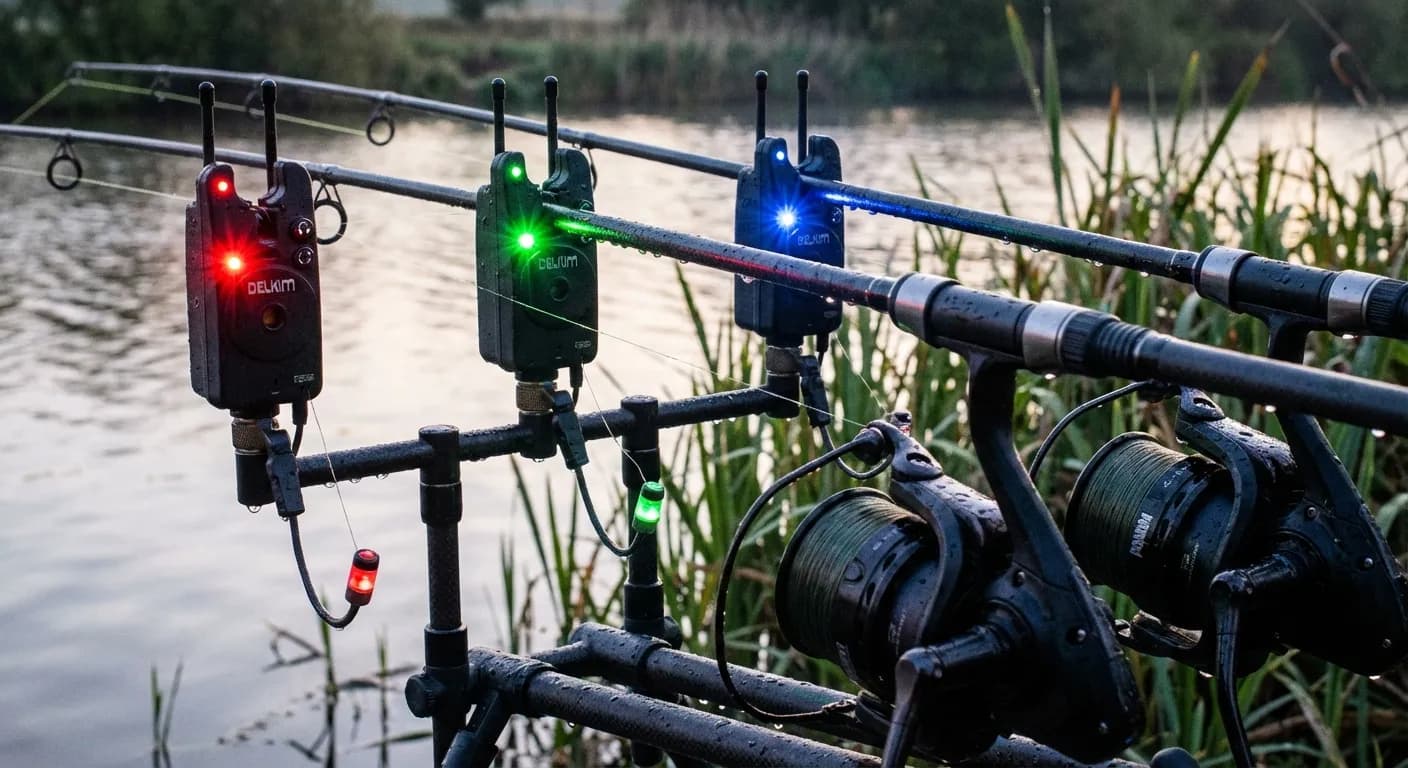
Choosing the right bite alarm
Choosing the right bite alarm
The bite alarm (or indicator) is essential equipment for carp fishing, especially for long or night sessions. It signals takes with a sound and often light signal, allowing you to react quickly without constantly watching the rods. On the Lot at Aiguillon, where sessions can last 24 to 72 hours, a good alarm makes the difference between a missed take and a fine catch.
From the pontoon of Gîte du Martin Pêcheur, bite alarms allow resting, preparing a meal or chatting while staying alert. Lot carp can bite at any time — dusk, night, dawn — and a reliable alarm misses no opportunity. Hamid can advise you on models suited to your practice and the lodge setting.
What you need
Simple alarms (roller)
Roller alarms: sensitive, economical, wireless. Ideal for beginners or a single rod. Adjustable sensitivity, basic sound alarm.
LED alarms
Alarms with LED to visualise takes at night. Essential for night fishing. Often compatible with a receiver.
Alarm receiver
A receiver connects several alarms, shows which rod has a take, allows adjusting sensitivity. Recommended for 2-3 rods and long sessions.
Mechanical bite indicators
Swinger or monkey climbers: complementary to alarms, they visually indicate line direction. Useful for detecting light takes.
Rigging and practice
Choose the alarm type
For 1-2 rods: simple LED alarms suffice. For 3 rods and more, or night sessions: invest in a receiver with alarms. Gardner, Delkim or Fox offer excellent value for money.
Install alarms on the rod pod
Fix each alarm on the rod support. The line must pass through the alarm (between the rollers) to detect movement. Check the line is taut.
Set the sensitivity
Set sensitivity to avoid false contacts (wind, current) while staying reactive. On the Lot, medium to high sensitivity works. Test before the session.
Check the batteries
Weak batteries = alarms that don't sound or sound continuously. Replace batteries before each long session. Bring spare batteries for 72h sessions.
Practice this technique with us
The private pontoon of Gîte du Martin Pêcheur is equipped to welcome your bite alarms. Night sessions and long sessions (48-72h) are common here. Hamid can point you to the best spots to set up your alarms. A good alarm will let you miss no take, even in the middle of the night. The calm of the place avoids false contacts from wind or passers-by.
Book your stayCommon mistakes
Sensitivity too high
Excessive sensitivity causes alarms at the slightest movement (wind, fish brushing the line). Reduce until you only get alarms on real takes.
Line poorly positioned
The line must pass correctly through the alarm. A line detached from the rollers won't trigger the alarm. Check installation before each session.
Forgotten or weak batteries
Check batteries before each session. For 72h, bring spare batteries. An alarm that doesn't sound = missed take.
Not testing before night
Test alarms during the day. Simulate a take by pulling the line. Check volume and that each rod is properly identified on the receiver.
Your questions about this technique
What alarm for beginners?
A simple LED alarm (Gardner, Fox, Delkim) suffices for 1-2 rods. Budget €30-60 per alarm. For 3 rods, add a receiver (€50-100).
Do you need a receiver for night fishing?
A receiver isn't mandatory but very practical: it shows which rod has a take and allows adjusting sensitivity. For night fishing, it's appreciated comfort.
How to avoid false contacts?
Lower the sensitivity. Make sure the line is taut. Avoid very windy zones. A stable rod pod also limits false contacts.
Are wireless alarms reliable?
Roller alarms (wireless) are reliable and economical. Models with cable and receiver offer more features. Both suit the Lot.
Where to install alarms on the lodge pontoon?
The rod pod fixes to the pontoon. Alarms go on each rod support. The installation is intuitive on the lodge pontoon.